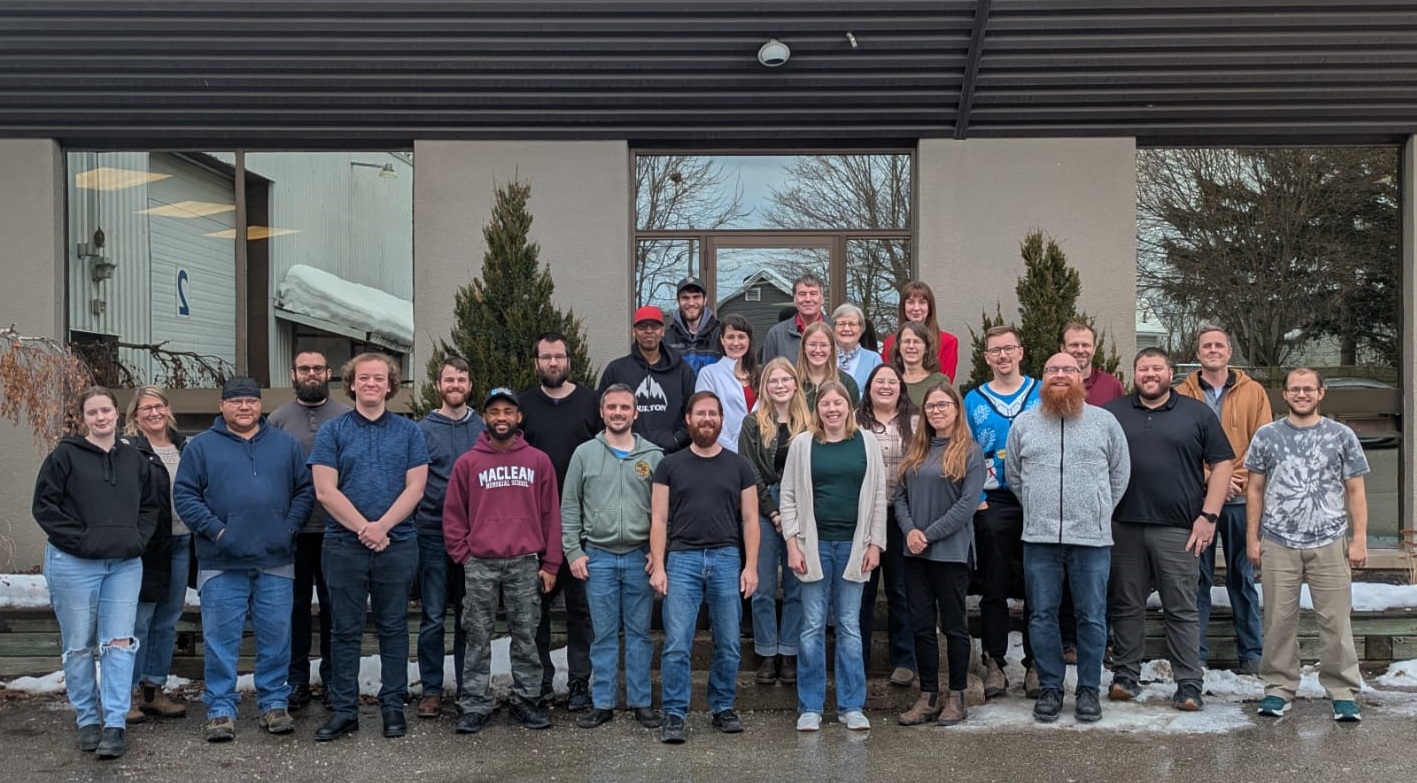
Katie Vander Klippe grew up around TMV Control Systems. Her father founded the engineering and manufacturing company, and Vander Klippe came on board in earnest in 2019. At the company of about 25 people in Cambridge, Ontario, she touches nearly everything that happens once a sale comes in.
"Maybe something along operations is a little more the direction I'm headed," she says, "but for now, I'm production manager."
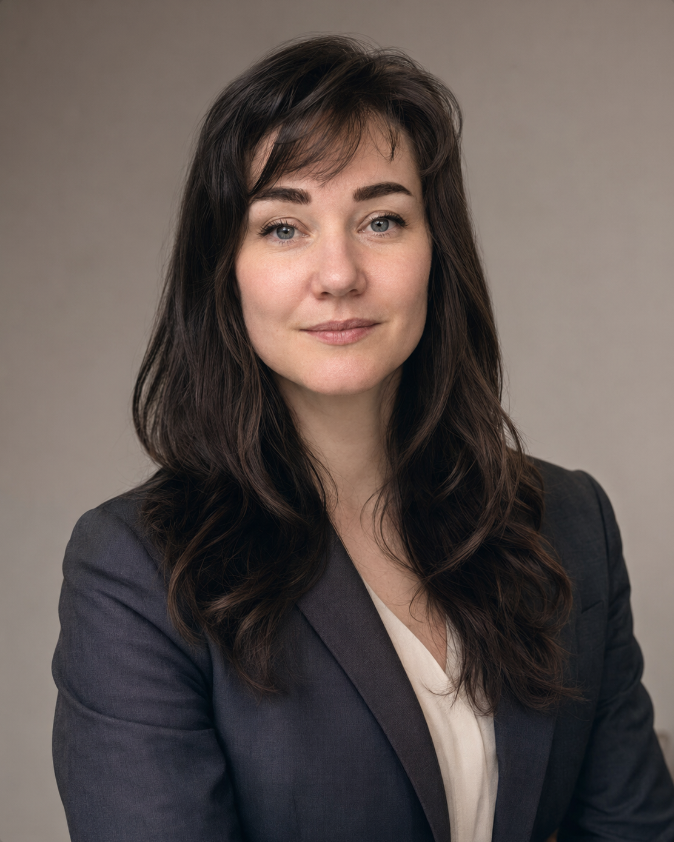
TMV designs and builds control systems for locomotives, light rail vehicles, and marine vessels. It’s the kind of equipment that runs for decades once it's installed and needs precision engineering to match.
Company revenues have more than doubled since 2022, the kind of growth most companies would call a problem worth having. But growth arrived faster than the systems and people meant to support it. For Vander Klippe, it meant more shipments, more new hires, and more decisions landing on her desk, but no additional hours in the day to handle them.
New tariffs in 2025 made things worse, handing her cross-border shipping and compliance work TMV had never managed on its own before.
It was, in every sense, more than one person could keep up with.
"I went on vacation last year and I was like, I don't want to come back," she says. "Not because I hate my job, I just can't handle it anymore. There was just so much to do, and more and more of it all the time. I just thought, I need something to change, and I don't even know exactly what it is."
That's the problem she carried into the Growth Development Program, offered through the World Trade Centre Toronto. She wasn't entirely sure what she was signing up for, or whether someone like her, with a career in production and no technical background, even belonged in the room.
Vander Klippe soon realized her lack of a technical background wasn't a detriment. Instead, her deep knowledge of the business, the customers, and how people in her industry speak turned out to be exactly what the technology needed to be paired with.
The clearest example was customer sentiment. Engineers don't say a product is "good" but instead use language like "it's working okay now," and a keyword search reads all of that as neutral. Catching the real meaning requires knowing the people and what their understatement signals, something Vander Klippe is well suited for.
So she fed years of notes into an AI tool, giving it that same context.
"What it told us was that our customers are trusting us with harder and harder problems," she says. "It's not overwhelmingly positive language, but underneath it all, the fact is they stay, and they trust us with more difficult stuff over time."
The same kind of value showed up everywhere she pointed AI, as TMV's team used it to rebuild several daily tools from the ground up:
- Shipping calendar. The old version turned green for any order with a due date, regardless of actual readiness. The rebuilt version shows real status, so sales can check lead times without asking.
- Payment-status tracker. TMV can't ship until payment clears, but there was no shared way to see whether a deposit had landed or an invoice gone out. Now anyone can check.
- Sales velocity tool. Anyone can pull up how much of a given part has sold over any stretch of time, useful for spotting real demand trends instead of guessing.
- Parts shortfall calculator. Enter a part number and a target build quantity, and it shows what's in stock, what's short, and what's already on order, replacing a manual, error-prone process.
Each new AI application removed a small daily difficulty, and with it, a little more of the stress that used to land on her desk. She credits her team with stepping up every time she asked.
"I'm much better at asking now than I was a year ago," she says, "and much better at making the important information visible so my team can actually help."
The result was the company becoming less dependent on one person's memory and more dependent on shared systems.
What Changed
Before
After
Administrative time
Untracked, accumulating daily
~5–10 hours/week reclaimed
Customer satisfaction reports (Meeting Notes Parser)
2–5 working days to analyze
Minutes — with human review
Sales velocity and demand analysis
Manual lookups; demand trends estimated by feel
Anyone can pull part-level sales data across any time period instantly
Customer sentiment analysis
Keyword searches flagged engineer understatements (“it’s working okay now”) as neutral — real meaning missed
Years of notes analyzed by AI with business context; revealed customers trust TMV with increasingly complex problems
Onboarding / knowledge retention
Dependent on institutional memory; lost when staff turned over
Knowledge embedded in shared systems (Part Number Wizard, purchasing, BOM, shipping docs, assembly instructions)
Despite the tariffs, and despite the pace of its own growth, the business came through the past few years without much trouble. Vander Klippe didn't. She admits that absorbing the weight of its success took a real toll, and she credits what she learned in GDP with completely changing her outlook on her job.
"It's got me from almost a place of desperation to a point where I have the momentum, I have the jet power," she says. "I'm not just constantly burning out. I have the circuitry that is relieving me from what I was going through."
"I really, really appreciate the level of confidence the program gave me to dive into my own seat and discover the solutions to a lot of my problems.”
TMV is now moving to handle more of its operations in-house, from tracking shipments to a customer's door to writing its own inventory software.
"The more we take in-house, the more successful we are," she says.
Asked how it feels now compared to a year ago, she doesn't reach for a metric.
"I'm just really loving my job again."
TMV Control Systems participated in Cohort 1 of the Growth Development Program, offered through the World Trade Centre Toronto in partnership with the Toronto Region Board of Trade. The next cohort begins in September. To learn more or register, visit bot.com/Programs-Networks/Growth-Development-Program.