Roughly 250 of the world's most powerful investors are in Toronto this week for the Canada Investment Summit. They collectively manage more than $120 trillion, and they're looking for their next projects.
The federal government wants a piece of that. Its goal is to catalyze $1 trillion in new investment over the next five years, by putting Canada's biggest projects on display and asking some of the world's largest funds to write very big cheques.
Those projects already exist, at least on paper. A separate tally, done independently by TD Economics, found that Canada has just over $1 trillion in major projects publicly announced or in early stages across five sectors. But most of that money isn't secured, and many of the projects are still only proposals, without regulatory approval or financing behind them.
It's a wish list, not a commitment, and turning it into something real is exactly what this week's summit is trying to do.
But if the summit is successful, it could be the jumpstart the country needs to enter a phase of growth it hasn't seen in generations.
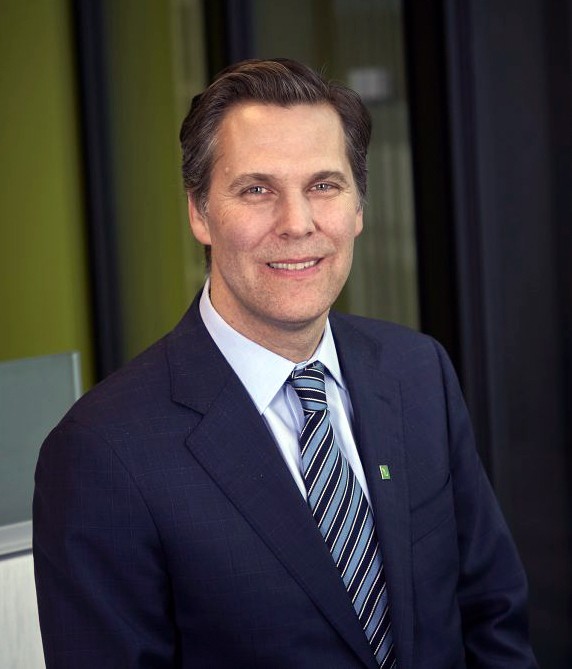
TD Deputy Chief Economist Derek Burleton
Economists don't use the word "supercycle" lightly. It describes a sustained boom lasting a decade or more, driven by structural forces rather than a good year or two.
Speaking with the Toronto Region Board of Trade, TD Economics' Deputy Chief Economist Derek Burleton said Canada might be at the start of one.
For the report Triggering a Canadian Investment Supercycle, Burleton and Chief Economist Beata Caranci went through federal and provincial project databases and added up everything announced across five sectors. They found $363 billion in energy projects, roughly a third of the total, followed by $281 billion in defence. AI infrastructure, resources and transportation make up the rest, bringing the tally to just over $1 trillion.
The timelines vary enormously, which is part of the point. Roughly $200 billion falls within the next two years. The biggest spike comes between 2029 and 2035, driven largely by energy. A quarter of the total is more than a decade out.
"Because of the varying timelines, you have the opportunity for a rotating wave of investment over the next ten-plus years," Burleton said.
"This is not our baseline forecast," he added. "This is the art of the possible if governments play their cards right."

Beyond Red Tape: Regulate for Growth
The Business Council of Toronto’s report outlines nine practical recommendations to fix Canada’s regulatory challenges
The benefits of a true supercycle in the Canadian economy would be substantial. TD estimates a decade of elevated investment would be worth close to a full percentage point of additional GDP growth a year, every year. That may not sound like much, but compounded, it adds up to roughly $12,000 in additional output per Canadian by 2035, roughly double what the current baseline forecast delivers, and a meaningful reversal after ten years in which living standards barely moved at all.
And that $1 trillion may only be the beginning. Early wins make the next projects easier to finance, a dynamic TD calls the flywheel effect.
"If you can get these projects done, investment can beget investment," Burleton said. "That could set the way for more projects in the future to add to the tally."
Under TD's high investment scenario, which assumes real investment growth of 7% a year, the total climbs to somewhere between $1.5 and $1.7 trillion over the next decade.
Behind each of the five primary areas TD cited are specific global macroeconomic tailwinds spurring investment:
- Energy: Oil and gas, LNG, nuclear and renewables. Electrification and AI data centres are straining grids that weren't built for them.
- AI infrastructure: Data centres, along with the land, cooling and fibre they require. The global compute buildout has to be housed somewhere.
- Defence: Procurement and modernization, including NORAD. Spending is climbing across NATO countries as security assumptions get rewritten.
- Resources: Mining projects at various stages. Supply chain realignment has made them strategically valuable, and reliable trading partners harder to find.
- Transportation: Ports, rail, highways, and bridges. Selling to new markets means moving goods along different routes than before.
Canada happens to have much of what that list requires. Burleton describes it as an unusual convergence.
"You have the structural forces in place globally, including the AI boom. You have Canada being a trusted market globally, all these free trade deals," he said. "It's just an interesting meeting of all these stars."

Raising the Bar: Improving the Ontario Immigrant Nominee Program
Recalibrating Ontario's nominee program toward high-skilled streams with faster, more predictable processing
The concept of a Canadian supercycle isn't new. The Bank of Canada has identified four commodity price supercycles in this country since 1899, and each one follows a recognizable pattern. Somewhere in the world, a large economy industrializes faster than anyone expected. Demand for raw materials spikes. Supply can't respond quickly, because mines and wells take years to build. Prices run above trend for a decade or more, and Canada, sitting on the raw materials, gets rich.
"It's not like this is completely foreign to see elevated investment for ten-plus years. We went through a nice run there, and part of it was China's ascent. Demand for resources, prices high, oil sands investment," Burleton said.
The first commodity supercycle Canada enjoyed ran alongside American industrialization at the turn of the last century. The second tracked global rearmament ahead of the Second World War. The third followed Europe and Japan rebuilding through the late 1950s and 60s. The fourth began in the mid-1990s and accelerated after China joined the World Trade Organization in 2001, eventually peaking in 2011. Between 2002 and 2014, Chinese demand accounted for all the growth in global metals consumption and more than half the growth in oil.
This supercycle, TD argues, would be distinct from those that came before. Rather than riding a single wave of resource demand, it would span five sectors at once, meaning it wouldn't be tied to one price cycle the way the last four were.
Patchwork to Prosperity
IMF analysis finds Canada's internal trade barriers function like a 9.5% tariff on our own economy, and removing them could add $210 billion to GDP. Our report calls for one Canadian economy delivered through a time-bound plan
Structural forces alone don't produce a supercycle. The last boom wasn't purely a matter of global demand arriving at the right moment. Governments moved too, and TD's report notes investment was supercharged when Canadian governments reduced royalties and lowered corporate income and capital taxes through the 1990s and early 2000s.
While TD stops short of providing specific recommendations for a 2026-and-beyond supercycle, it does suggest what it would take this time around to create the right conditions for one, and the to-do list comes in four parts:
- Lowering the regulatory wall for major projects.
- Fixing tax disincentives.
- Creating an environment where firms can scale.
- And expanding skilled labour capacity.
Get even partway there, the report argues, and less public money is needed, because a private investment ecosystem starts doing the work instead.
"There is no magic bullet," Burleton said. "Basically, push on all fronts."
This is part one of a two-part series.